Old Coulsdon High Street removals tips for narrow lanes
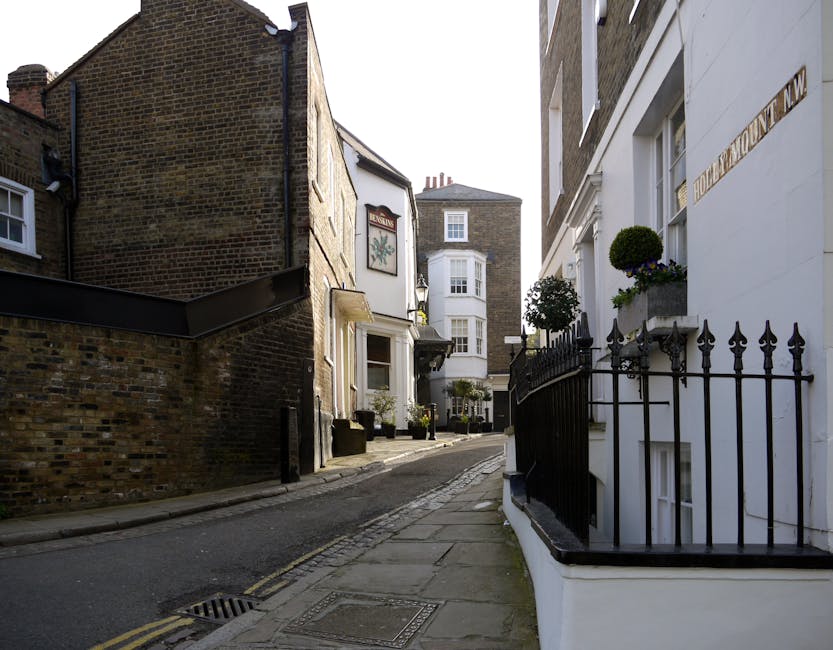
Moving on or near Old Coulsdon High Street can feel straightforward on paper, and then the lane width, parked cars, awkward corners, and tight timing remind you otherwise. If you are looking for Old Coulsdon High Street removals tips for narrow lanes, you are probably trying to solve a very real problem: how to move furniture, boxes, and white goods without blocking the street or turning the day into a slow-motion headache.
This guide is built for that exact situation. We will walk through access planning, vehicle choice, parking realities, loading strategies, and the little details that make a narrow-lane move go smoothly. Truth be told, the difference between a stressful move and a fairly calm one often comes down to preparation done before the van even arrives.
Whether you are moving from a flat above a shop, a terraced home, or a property tucked just off the High Street, the same principle applies: keep the move compact, coordinated, and realistic. That means understanding the street, choosing the right removals setup, and leaving room for the unexpected. Not glamorous, but very effective.
- Why narrow-lane removals in Old Coulsdon matter
- How the move works in practice
- Benefits of planning for tight access
- Who this advice is for
- Step-by-step moving guidance
- Expert tips for better results
- Mistakes people make on narrow streets
- Tools, resources and useful services
- Compliance and best practice
- Options and method comparison
- Real-world example
- Practical checklist
- Conclusion
- Frequently asked questions
Why Old Coulsdon High Street removals tips for narrow lanes Matters
Old Coulsdon High Street and the lanes around it can present the kind of access challenge that catches people out only once. On a map, the route looks fine. In real life, a parked car on one side, a delivery van on the other, and a van that needs a clean turning gap can quickly change the whole plan. Narrow lanes do not forgive guesswork.
That matters for several reasons. First, access affects timing. If the van cannot stop close enough to the property, every item has to be carried farther, which takes longer and increases the chances of knocks and scrapes. Second, access affects cost. More labour time, more shuttle trips, and more waiting time can all add pressure. Third, access affects everyone else on the street. A move that blocks a lane for too long can frustrate neighbours, drivers, and sometimes the people doing the move as well.
To be fair, most removals teams can adapt to difficult access. The question is whether the plan has been adapted before moving day or improvised on the kerb. There is a big difference. A prepared move feels orderly; an improvised one feels like trying to fold a fitted sheet in the rain.
For local moves, especially around smaller residential streets, the aim is not simply to fit a van in. It is to design the whole move around the street. That is the real skill.
How Old Coulsdon High Street removals tips for narrow lanes Works
At a practical level, narrow-lane removals work by breaking the move into smaller decisions: where the vehicle stops, how items are carried, whether parking needs arranging, and how the team protects property and surrounding spaces. The more constrained the street, the more important it is to plan the sequence.
Here is the usual flow. First, the mover or client assesses the access: road width, parked vehicles, pavement space, turning points, and any height restrictions or awkward bends. Then the vehicle choice is matched to the road, not the other way round. A smaller van or a man and van setup is often more suitable than a large removal truck where space is limited. After that, the loading strategy is set. Heavy items go first, fragile items are protected, and anything likely to snag in a tight hallway is handled early.
Good narrow-lane removals also rely on communication. If the road is tight, the driver may need a second person to guide positioning. If parking is uncertain, arrival timing becomes important. If the property has steep steps, a tight front path, or a shared entrance, that changes how the carry is staged. Small things, but they add up fast.
One thing people sometimes miss: a short carry from the van is not always the safest carry. If the vehicle has to stop in a poor position, a short carry can become a rushed one. A slightly longer but safer parking position is often the better trade-off. You will notice this in tight streets quite quickly once the day starts moving.
If you are weighing vehicle options, it can help to compare service styles. Some households do best with a full home move service, while others only need a more compact vehicle approach such as man with van support. For larger household moves, the broader home moves and house removals options may be more suitable.
Key Benefits and Practical Advantages
Planning specifically for narrow lanes is not just about avoiding trouble. It brings real advantages that you feel on the day and, frankly, after the move too.
- Less delay: A well-matched vehicle and route reduces wasted time waiting for a safe stopping point.
- Lower risk of damage: Fewer awkward lifts, fewer tight turns, and less scrambling around parked cars.
- Better neighbour relations: A move that is controlled and tidy tends to cause less irritation on a busy street.
- Cleaner loading flow: When the team knows the access constraints, the sequence of loading becomes smoother.
- More accurate quotes: Access details help providers estimate labour and vehicle requirements more realistically.
Another practical advantage is mental. Narrow access can make even a small move feel bigger than it is. Good preparation lowers the tension. That matters. People think moving stress is only about boxes, but often it is the unknowns - where will the van go, will it fit, will the street block up, what if the washing machine is too awkward to carry? Once those questions are answered, the move stops feeling like a mystery.
If you are comparing service types, there is also a cost-control angle. A smaller, better-planned move may be more efficient than sending in a large vehicle that cannot park properly. If you are pricing up options, the company's pricing and quotes information can help you understand how access affects the final figure.
Who This Is For and When It Makes Sense
This advice is for anyone moving where access is not generous. That includes top-floor flats on a tight street, family homes with limited kerb space, small business relocations with loading concerns, and short-notice local moves where everything has to happen efficiently.
It especially makes sense if your property is near a busy stretch, if neighbours already park tightly, or if a vehicle would need to stop across from another parked car to load safely. It also helps if you have large furniture, fragile items, or anything awkward like a treadmill, sideboard, piano, or wide wardrobe. The bigger the item, the less patience narrow lanes tend to have.
This is not only for people moving from the High Street itself. Nearby side roads, back lanes, and short access roads can be just as tricky. Sometimes the main issue is not width alone. It is the mix of width, traffic, and limited stopping time. One of those on its own is manageable. Two or three together, and you want a plan.
Commercial movers can benefit too. Small offices, salons, and local retailers often need to shift equipment or furniture without disrupting customers or blocking deliveries. If that sounds familiar, a commercial moves approach may be worth exploring alongside the right access planning.
Step-by-Step Guidance
Below is a practical route through the move. Nothing fancy. Just the sequence that tends to work best in narrow-lane conditions.
- Check the access properly. Walk the route from property to road. Look for parked cars, low branches, tight bends, steps, and pinch points. If you can, look at it at the time of day you expect the move to happen.
- Measure the awkward bits. Doorways, hallways, stair turns, and large items all matter. A wardrobe that clears the door by inches is a plan; a wardrobe you hope will "probably be fine" is not.
- Choose the right vehicle size. For narrow lanes, smaller often beats larger. A more compact removal van or removal services setup may be better than a bigger truck if access is tight.
- Split the load logically. Keep essential items separate, group fragile pieces, and make sure heavy boxes are not buried under light ones that will need rehandling.
- Protect the route. Use blankets, floor protection, and corner guards where needed. Hallways on older properties can be scuffed quickly, especially with repeated carries.
- Plan parking and timing. Decide where the vehicle will stop, how long it can remain there, and whether anyone needs to watch the street while loading.
- Load in the right order. Heavy and stable items go in first, then medium items, then fragile goods. Keep essentials reachable.
- Leave a buffer. Narrow streets rarely go exactly to plan. A small timing buffer reduces stress when a neighbour moves a car, a delivery arrives, or the lane gets busy.
A useful habit is to think in terms of the whole move path rather than just the van. From bedroom to hallway to doorway to pavement to vehicle - every step can create friction. Smooth the path and the whole day gets easier. Simple, really, though not always easy.
Expert Tips for Better Results
Here is the part that usually makes the biggest difference in real life.
1. Time the move with the street, not with the clock alone. Early morning can be quieter, but not always. Midday may mean more traffic, more delivery vans, and more parked cars. If you know the street's rhythm, use it. The quietest 30 minutes on the road can save a lot of hassle.
2. Use a spotter when reversing or edging into a narrow gap. Even a skilled driver benefits from another set of eyes. One person watching mirrors, kerbs, pedestrians, and wing mirrors can prevent a clumsy scrape. You only need one close call to appreciate that.
3. Keep one "easy access" box aside. Put kettle items, charger cables, documents, basic tools, and snacks in a clearly marked box. It saves rummaging later, especially if you are still half-moved when the day is getting dark and everyone is a bit worn out.
4. Ask about carrying distance before the day. It changes labour and timing more than people expect. A van parked five houses away is not a problem if the team knows it in advance. A van parked five houses away because no one planned access? That is a different story.
5. Treat bulky items as access risks, not just weight risks. Sofas, beds, wardrobes, and appliances are often the pieces that expose a narrow lane plan's weak spots. If you need help with one of those items, a targeted approach can be useful. For example, you may want to review guidance like moving your bed and mattress or consider specialist handling for awkward furniture.
6. Keep neighbours in the loop when appropriate. A polite heads-up can avoid unnecessary friction. You do not need to overdo it. Just enough so people know a van may be present and the street might be busier for a short time.
One more thing: if your move is happening in a particularly tight window, the best mover is not always the biggest one. It is the one that can adapt quickly. In narrow-lane work, flexibility beats brute force almost every time.
Common Mistakes to Avoid
Most narrow-lane problems are predictable. That is the annoying part. The good news is they are also avoidable.
- Assuming a large van will "just fit". If access is tight, size matters. A wrong-size vehicle can turn a simple job into a shuffle of parked cars and crossed fingers.
- Ignoring parking restrictions or local limitations. Parking assumptions cause delays, fines, and friction. If anything needs arranging, sort it early.
- Not measuring bulky items. The sofa that looked fine in the living room may be the thing that blocks the stairwell on the way out.
- Packing too late. Narrow access moves need tidy, ready-to-go boxes. Last-minute packing creates bottlenecks exactly when you least want them.
- Forgetting protection materials. A narrow hallway with no floor protection can become marked very quickly. Older properties especially need care.
- Underestimating loading time. Short street? Maybe. Quick move? Not necessarily. A tight lane can slow down even the smallest job.
- Failing to plan for the unexpected. A delivery van, a neighbour's car, or a council vehicle can change the access situation in minutes.
There is also a subtle mistake people make: they treat access as the driver's problem alone. It is not. The best results come when the client, the mover, and the site conditions all line up. That shared awareness saves stress, and a fair bit of muttering too.
Tools, Resources and Recommendations
You do not need an elaborate kit, but a few simple tools make narrow-lane removals much easier.
| Tool or resource | Why it helps | Best use in narrow lanes |
|---|---|---|
| Measuring tape | Confirms door widths, furniture sizes, and stair turns | Prevents last-minute surprises |
| Furniture blankets | Protects items and walls from scuffs | Useful on tight corridors and door frames |
| Floor protection | Reduces marks on hallways and entry paths | Important in older homes and flats |
| Labels and marker pens | Speeds up sorting and unloading | Keeps the move moving when space is limited |
| Small removal van | Often easier to position on narrow streets | Better for tight access than an oversized vehicle |
If you are still deciding between service styles, it can help to compare the use case. A full team and larger vehicle may suit a bigger household move, while a smaller setup can be ideal for local access constraints. The broader removals and man and van removals pages can help frame that choice.
For extra peace of mind, review support policies before booking. The company's insurance and safety information and health and safety policy are good places to understand how care is handled in practice.
Law, Compliance, Standards, or Best Practice
For a move on a narrow street, compliance is mostly about common-sense adherence to local conditions, parking rules, road use, and safe lifting practice. Exact requirements can vary depending on the street, the vehicle, and whether any permit or loading restriction applies. It is wise to check the relevant local expectations before the day rather than assuming all kerb space is fair game.
Best practice usually means avoiding obstruction, not blocking driveways or access points, keeping gangways clear where possible, and ensuring people can move safely around the vehicle. In practical terms, that also means planning whether the van can stop legally and safely close enough to the property to make loading realistic. If it cannot, the move plan should change rather than forcing the issue.
For some jobs, parking and access arrangements need particular care. If you want to understand how local move logistics can affect the day, it is useful to read more about parking permits for Old Coulsdon moves and related access planning guidance. Likewise, situations involving temporary road use or restricted access may be better handled with advance planning around street closure permits where those are relevant.
Health and safety matters too. Heavy lifting, awkward turns, and narrow hallways are where injuries and damage are most likely to happen. Proper technique, suitable equipment, and realistic staffing are not extras. They are the work. To be blunt, good compliance saves grief.
Options, Methods, or Comparison Table
Not every move in a narrow lane needs the same setup. The right method depends on what you are moving, how much access you have, and how much time you want to spend on the kerb.
| Method | Best for | Strengths | Trade-offs |
|---|---|---|---|
| Small van / man and van | Local moves, light-to-medium loads, tight streets | Easier parking, more flexible access, usually quicker to position | May require more trips for larger homes |
| Full removals team | Family homes, heavier loads, multi-room moves | More hands, better for bulky furniture and structured loading | Needs more space and may be harder to place on narrow roads |
| Partial packing support | Clients who have time but want help with fragile or awkward items | Reduces stress, protects delicate items, speeds final loading | Requires clear decisions about what stays client-packed |
| Full packing and unpacking | Busy households, time-sensitive moves, high-item-count homes | Very efficient, fewer loose ends, easier on moving day | Higher service level, so it needs early booking and planning |
For many Old Coulsdon High Street moves, the most practical answer is a hybrid one: a suitably sized vehicle, some packing help, and good access planning. That combination tends to be more realistic than trying to make a one-size-fits-all approach do everything.
Case Study or Real-World Example
Here is a realistic example based on the kind of move people often face around Old Coulsdon High Street.
A couple moving from a first-floor flat with a narrow stairwell had a sofa, a bed frame, a dining table, and around 30 boxes. The street was tight enough that a large vehicle would have struggled to stop without causing congestion. Rather than trying to force a big truck into the road, they opted for a smaller van and split the day into two clearly planned loading runs.
The team arrived early, before the street became busier, and parked where there was enough room to load safely without blocking a driveway. The client had already measured the awkward furniture pieces and removed table legs, light fittings, and loose shelving in advance. That small bit of prep made a surprising difference. The carry route was protected with blankets, and the fragile boxes were loaded separately so they could be unloaded first at the new property.
Did everything go perfectly? Not quite. A neighbour's car arrived just as the sofa was coming out, so the team paused, waited, and re-angled the carry. No drama. That pause probably saved a scrape. In the end, the move stayed calm because the plan allowed for a little flexibility. That is the real lesson here: tight access is manageable when everyone expects a small wobble or two.
For awkward furniture or bulky household pieces, it can also help to study specific handling methods. The guidance on sofa handling and protection and other specialist moving advice can be useful when you are trying to avoid damage on a cramped route.
Practical Checklist
Use this simple checklist before moving day. It keeps the details under control, which is half the battle.
- Measure doors, hallways, stair turns, and any large furniture pieces.
- Check the street layout at the likely move time.
- Confirm where the vehicle can stop safely and legally.
- Decide whether a smaller van is more practical than a larger truck.
- Separate fragile items and label them clearly.
- Prepare a first-night essentials box.
- Protect floors, corners, and door frames if needed.
- Tell neighbours if access may be briefly affected.
- Build in extra time for parking or loading delays.
- Have a backup plan if the road is busier than expected.
Expert summary: the best narrow-lane move is not the fastest-looking one at the start. It is the one that stays steady when the street gets awkward. Good measurements, realistic vehicle choice, and a calm loading sequence usually beat speed every time.
If you want a simple next step, start by reviewing your access, then compare service levels and quote options so you can match the move to the street rather than forcing the street to fit the move.
Get a free quote today and see how much you can save.
Conclusion
Old Coulsdon High Street removals tips for narrow lanes come down to one thing: plan the move around the access, not around hope. Once you accept that narrow streets need a more thoughtful setup, everything becomes easier to manage. The van choice gets clearer, the carrying route gets simpler, and the day feels less like a gamble.
There is no magic trick here, just practical decisions made early. Measure honestly. Choose the right vehicle. Keep the loading flow tight. Leave room for small delays. And do not be shy about asking for help with the awkward bits. That is what experienced movers are for.
In the end, a good move in a narrow lane is not about perfect conditions. It is about steady hands, sensible planning, and a bit of patience. Usually that is enough. Sometimes more than enough.
And when the last box is inside and the street noise fades, that quiet little feeling of relief is worth the effort.
Frequently Asked Questions
What makes Old Coulsdon High Street removals difficult in narrow lanes?
The main issue is access. Narrow lanes can limit where a vehicle can stop, how easily furniture can be carried, and how long the loading process takes. Parked cars and passing traffic can make things tighter still.
Is a small van better than a large removal truck for tight streets?
Often, yes. A smaller van is usually easier to position and can reduce the risk of blocking the lane. For larger homes, though, you may still need a bigger vehicle or a hybrid plan that balances access and load size.
How far in advance should I plan a move on a narrow road?
As early as possible. Even a local move benefits from advance planning because parking, access, and packing all affect the day. Leaving it to the last minute can make simple things much harder.
Do I need to measure my furniture before moving?
Yes, especially for bulky pieces like sofas, wardrobes, and beds. Measurements help you work out whether items will fit through doors, stair turns, and hallways without damage or delay.
What if the van cannot park directly outside my property?
That is common on narrow streets. The move can still work if the team plans for a longer carry distance and allows extra time. The important part is knowing that in advance so the quote and timing are realistic.
Can I still move if the street is busy with parked cars?
Usually yes, but it needs careful timing and a sensible vehicle choice. Early starts, short loading windows, and clear communication all help. If the street is especially busy, smaller vehicle access is often the safer route.
Are there parking or permit issues I should think about?
Possibly. Parking restrictions, loading limitations, or local access rules can affect how the move is organised. It is best to check ahead of time rather than assuming you can use any available kerb space.
What items cause the most trouble on narrow lanes?
Large sofas, wardrobes, beds, washing machines, and long dining tables often cause the most difficulty. They are awkward to turn, heavy to carry, and more likely to snag in tight hallways or stairwells.
Should I pack everything before the removals team arrives?
Ideally, yes. Finished packing helps the move stay compact and efficient. If you need help, consider a packing support service so the most fragile or awkward items are handled properly.
How can I reduce the risk of damage during a narrow-lane move?
Use protective materials, clear the route, measure bulky items, and avoid rushing. Damage often happens when people try to squeeze through too quickly or with too little planning.
Is a man and van service suitable for Old Coulsdon High Street moves?
It can be an excellent choice for smaller loads or tight access. A compact vehicle and flexible approach are often better suited to narrow lanes than a larger operation that struggles to position itself safely.
What should I do if my move is urgent and access is tight?
Be clear about the access problem straight away and choose a service that can respond quickly. For short-notice moves, smaller vehicles and flexible timing are usually the most practical options.